
San Patricio County Civil Docket Searches
The main online route for indexed district civil and family matters is the re:SearchTX Court Records Search. Search by cause number when you have one. A party or attorney name can pull similar names from several courts at once, so check county, location, category, filed date, and judge before trusting a hit. The District Clerk keeps district cases. County Courts at Law and county-level civil records route through the County Clerk, while small claims, debt claims, and evictions may belong to a Justice Court.
When the portal fails, contact the clerk directly. District Clerk records: 361-364-9377, option 2, or dcinfo@sanpatriciocountytx.gov. County Clerk routing starts at 361-364-9350. Each Justice Court clerk handles that court's own file. For mail or in-person requests, list the court, style, cause number, date range, and the exact item you need.
- Identify the court from the pleading, notice, or cause number.
- Search the full cause number in Cases.
- Try party or attorney fields and narrow the results.
- Read events, hearings, and document status separately.
- Contact the owning clerk for an unavailable or certified item.
San Patricio Civil Court Assignment
District civil and family cases are filed with the District Clerk. They are then rotated among three multi-county courts. The official civil and family case page explains the suffix clue. A means the 36th District Court, B the 156th, and C the 343rd. These courts also sit in four other counties, so confirm the San Patricio location before assuming anything.
That letter helps route a setting request. But it does not override a current order or case detail if the assignment changed. Once a motion or pleading is filed, the assigned administrator handles setting requests. Email is preferred. Phone, mail, and fax are also listed. Raise expedited matters and temporary restraining order issues by phone. The official district page shows the local workflow and the full contact pattern.
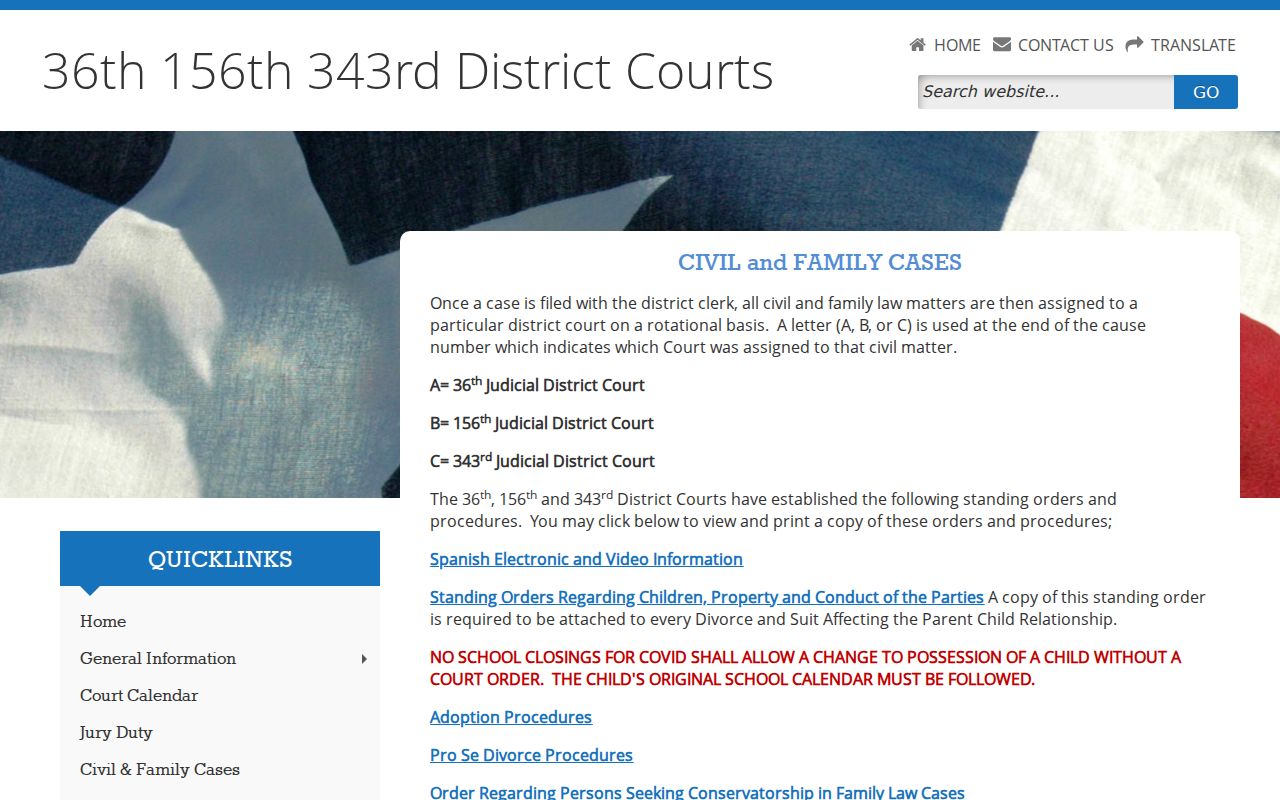
Its rotation and setting guidance ties a cause suffix to the right administrator. Even so, the current case record stays the controlling source for any detail that matters.
Civil Dockets: What They Show
Read the case detail in two layers: the basic header, then the later activity. That split prevents a common mistake. A document price is not a judgment amount, and an event label does not prove its image is publicly downloadable.
| Case information | Cause number, location, category, type, filed date, judge, and status |
|---|---|
| Parties | Role, name, public alias information, and attorneys of record |
| Events | Date, event, type, comments, and linked-document status |
| Documents | Document name, pages, price, and availability where displayed |
| Hearings | Date, time, court, setting type, and status where available |
A certified order comes from the clerk, and a transcript comes from the reporter. Printing the public event screen creates neither one.
San Patricio Civil Docket Intake
The County Clerk's Civil Case Information Sheet records the court, style, attorney contact and State Bar information, party roles, and a classification for the new filing. Treat it as an intake document, not a live status report.
Its civil choices run from consumer or DTPA, contract, fraud, debt, foreclosure, foreign judgment, intellectual property, condemnation, partition, quiet title, property, and other civil groups. Family selections include name change, protective order, minor guardianship, and related remedies. Those categories help explain the case header. They do not decide jurisdiction on their own. The local sources offer no safe county-specific dollar threshold table.
What Cases Fill the Civil Docket
District courts handle general civil matters within their jurisdiction. County Courts at Law hear county-level civil matters. Justice Courts handle statutory small claims, debt claims, and evictions. Family cases enter the district system too, though some child, adoption, and protected information may stay out of public view.
- Contract, debt, and fraud disputes
- Property, foreclosure, partition, and title matters
- Personal injury and other tort claims
- County-level civil cases in the Courts at Law
- Small claims, debt claims, and evictions in Justice Court
- Public portions of family matters
Pick a clerk by the pleading and court name, not just the subject of the claim. A filing sheet classifies a case, but only the court decides jurisdiction.
San Patricio Civil Docket Sequence
A civil register usually starts with a petition or complaint. Citation and service come next. An answer or other response follows. Discovery may not produce a public image for every exchange, but motions, setting notices, hearings, and orders can all appear as dated events. Judgment or dismissal closes many cases, while abstracts, writs, garnishment, or an appeal may extend the record further.
Docket flow: Petition Filed › Service › Answer › Motions › Setting › Judgment or Dismissal › Post-Judgment
Common labels need context. A default can follow a missed response, a nonsuit can end a claim without a merits trial, and DWOP means dismissal for want of prosecution. Confirm the signed order itself. The label alone may not reveal all the terms.
Hearings on the Civil Docket
A hearing entry can name a motion, status conference, non-jury setting, jury trial, or other court event. The district site puts one rule plainly. A setting is not made unless the motion or pleading is on file when the request arrives. That rule ties the docket event to the scheduling process. In family cases, required standing orders or a parenting certificate can also affect readiness.
Compare re:SearchTX hearings with the official annual calendar, then confirm through the assigned administrator. Calendars can change hourly. A school closure or other outside event does not itself alter a possession order. Any remote appearance remains subject to the judge. The broader San Patricio court schedule explains the confirmation chain.
San Patricio Civil Docket Documents
A docket line tells you what was filed and when. It does not hold the text itself. In re:SearchTX, open the case description and browse the filings or documents tab. Note the name, page count, price, and status of each item. Non-attorneys may have to buy an available image. If no image opens, ask the San Patricio clerk for a plain electronic or paper copy of the filing.
Key distinction: A motion, order, or judgment event can remain public even when its attachment is priced, redacted, sealed, or unavailable online.
For a certified copy, give the San Patricio County clerk the exact document type and its date. Ask the current charge and the delivery time too. Turnaround varies, so the clerk quotes it case by case.
Who Can See Civil Dockets
Texas starts from the opposite of secrecy. Under Rule 21c of the Rules of Civil Procedure, sensitive data must be redacted. That must happen before a civil filing goes public. It covers certain account numbers, birth dates, addresses, and the names of minors. Rule 76a also presumes court records are open. It limits when a judge may seal one. Family and child details can stay restricted even while the docket entry itself stays visible to the public.
Courts answer to different rules than agencies do. Government Code section 552.0035 treats the judiciary separately from the executive branch. So an adjudicative file goes through the court's own records process rather than a standard open-records request. Covered administrative material takes the Texas judiciary open-record route instead. If a clerk denies access, ask whether a redacted copy exists. Or ask whether a formal court-access procedure applies. One caution matters here. A sealed or missing document tells you nothing about who won or lost. Never read the merits into it.
San Patricio Older Civil Dockets
Older San Patricio County civil dockets rarely sit in a searchable online index. Archived case records usually take a request. Mail, phone, email, and in-person visits all work. Help the clerk narrow the hunt by giving an approximate year, the court, and the party names. Any cause, volume, or page reference helps. It also pays to ask how the material is stored. Files may be bound, microfilmed, or archived. Some sit in off-site storage.
One trap deserves mention. The publicsearch.us and Kofile links on the County Clerk page are not a full civil lawsuit file. They lead to public and land indexes. A clerk-assisted search may also produce a docket sheet first. Every page image you asked for can turn up later. Decide early whether a plain printout will do, or whether you need a certified copy. Fees and retrieval time vary, so ask the clerk for current rates.